
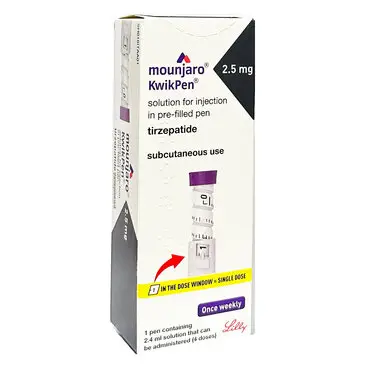
Images for illustrative purposes only
Looking for Next Day delivery?
Order before 15:30 on Monday to Friday for next day delivery
Mounjaro
Mounjaro is a prescription-only, once-weekly injection licensed in the UK to help adults manage their weight, alongside a reduced-calorie diet and increased physical activity[1][2]. The active ingredient in Mounjaro is called tirzepatide, a dual GIP and GLP-1 receptor agonist and a newer type of weight management medicine[2]. Every order starts with an online consultation, which a UK prescriber reviews before any treatment is supplied.
- Once-weekly weight loss injection with a pre-filled pen
- Contains tirzepatide, a dual GIP and GLP-1 receptor agonist
- 20.9% average weight loss at the highest dose over 72 weeks[7]
Buy Mounjaro weight loss injections online
You can only get Mounjaro with a prescription, so we follow the same steps for every patient:
- Complete the online consultation. Tell us about your height, weight, health, medical history, any current medication you are taking and your weight loss goals.
- Our UK GPhC-registered prescribers review your answers. They may contact you for more information before deciding whether Mounjaro is suitable for you.
- If approved, we will dispatch your medication. Orders are sent in discreet packaging from our GPhC-registered pharmacy.
The MHRA advises buying weight loss medicines only with a prescription from a registered pharmacy and never from beauty salons, social media sellers or unregulated websites[3]. You can check any pharmacy on the GPhC register [4].
What is Mounjaro (Tirzepatide)?
Mounjaro is a brand of tirzepatide, a weight loss medication made by Eli Lilly and supplied as a single-patient KwikPen for injection under the skin[2][5].
In the UK, Mounjaro is licensed for two uses, type 2 diabetes and weight management in adults[2]. The MHRA authorisation for weight management use came in the UK in November 2023[1].
Tirzepatide is a dual GIP and GLP-1 receptor agonist. It acts on two gut hormone receptors involved in appetite and blood sugar control[2][6]. Mounjaro works by:
- reducing appetite and helping you feel fuller for longer[6]
- slowing the rate at which food leaves the stomach[2][6]
How effective is Mounjaro?
In the SURMOUNT-1 clinical trial, adults taking the highest dose of Mounjaro (15mg) alongside a reduced-calorie diet and increased physical activity lost an average of 22.5% of their body weight over 72 weeks compared with 2.4% on placebo[7]. Results vary between people and depend on dose, diet and activity.
Who can use Mounjaro?
Mounjaro is licensed for weight management treatment in adults aged 18 and over who have[1][2]:
- a body mass index (BMI) of 30 kg/m² or more, or
- a BMI of 27 to 30 kg/m² with at least one weight-related health condition, such as prediabetes, high blood pressure, high cholesterol or heart problems
It must be used together with a reduced-calorie diet and increased physical activity[1][2]. The MHRA states that GLP-1 medicines are not for cosmetic or aesthetic weight loss[3]. Our prescribers will only supply Mounjaro where it is clinically appropriate for you.
Mounjaro is not licensed for children or teenagers for weight management [1][2]. If a young person is struggling with their weight, their GP can advise on the support available.
Mounjaro on the NHS
NICE recommends tirzepatide on the NHS for adults with a BMI of at least 35 kg/m² and at least one weight-related condition, with a lower threshold (usually 2.5 kg/m² lower) for people from South Asian, Chinese, other Asian, Middle Eastern, Black African or African-Caribbean backgrounds[8]. Access is being phased in, so you can ask your GP whether you qualify.
Mounjaro doses and strengths
Treatment starts at the lowest dose and increases gradually to give your body time to adjust to the medication. Mounjaro comes in six strengths[2]:
- 2.5mg
- 5mg
- 7.5mg
- 10mg
- 12.5mg
- 15mg
The maximum dose is 15mg once a week[2]. Each KwikPen holds four weekly doses[2][5]. Your prescriber will decide whether and when to increase your dose. For an overview see the table below and for an in-depth guide to dosage, read our Mounjaro dosage chart guide.
| Stage | Weekly dose | How long |
|---|---|---|
| Starting dose | 2.5mg | 4 weeks |
| First increase | 5mg | At least 4 weeks |
| Further increases (if necessary) | Up in 2.5mg steps (7.5mg, 10mg, 12.5mg. 15mg) | At least 4 weeks on each |
| Maintenance | 5mg, 10mg or 15mg | Ongoing, as prescribed |
How to use the Mounjaro pen
Mounjaro is injected under the skin once a week, on the same day each week, into the stomach area, thigh or back of the upper arm[2][5]. Every pen comes with the manufacturer's instructions.
- Read our full guide on how to inject Mounjaro
Who should not use Mounjaro?
You should not use Mounjaro if you are allergic to tirzepatide or any of its other ingredients[2][5]. Additionally, Mounjaro should not be used in pregnancy [2][6]. If you are trying to get pregnant, Stop at least one month beforehand and speak to your prescriber.
If you are breastfeeding or planning to, tell your prescriber. Current guidance says Mounjaro may be considered during breastfeeding, but your prescriber will advise whether it is right for you[2].
Mounjaro precautions
Tell your prescriber before starting Mounjaro if any of these apply to you:
- Pancreatitis, now or in the past. Mounjaro can sometimes cause acute pancreatitis[2][6].
- Severe stomach or bowel problems, including severe gastroparesis (slow stomach emptying)[2].
- Kidney problems. Sickness and diarrhoea can cause dehydration, which can affect the kidneys[2].
- Diabetic eye disease (retinopathy). Rapid improvement in blood sugar can temporarily worsen it[2].
- Gallbladder problems. Gallstones and gallbladder inflammation are known side effects[2][6].
- Diabetes medicines, especially insulin or sulphonylureas such as gliclazide, as low blood sugar (hypoglycaemia) is more likely. Your doctor may need to lower the dose of these medicines[2][5]. Signs of low blood sugar include headache, drowsiness, weakness, dizziness, confusion, irritability, hunger, a fast heartbeat and sweating. Do not drive or use machinery if you notice any of these, and ask your doctor how to treat low blood sugar[5][6].
- Other weight loss or GLP-1 medicines, such as semaglutide or liraglutide. Do not use Mounjaro alongside another GLP-1 medicine and always tell your prescriber about any other medicines you are using, have recently used or might use[5].
- An eating disorder, now or in the past. Our prescribers will ask about this as part of your consultation to check whether Mounjaro is safe and suitable for you.
- The contraceptive pill. Mounjaro may make the pill less effective. Use a barrier method such as condoms for 4 weeks after starting and for 4 weeks after each dose increase or switch to a non-oral method such as a coil or implant[2][3][6].
- An upcoming operation or sedation. Tell your healthcare team, including the anaesthetist, as Mounjaro slows stomach emptying[2][3].
- Medicines that need careful monitoring, such as warfarin[2].
It's best to avoid alcohol while using Mounjaro, as it can make gastrointestinal side effects like nausea and vomiting worse[6].
Mounjaro ingredients
Active ingredient: tirzepatide[2].
Other ingredients[5]: sodium phosphate dibasic heptahydrate, benzyl alcohol, glycerol, phenol, sodium chloride, sodium hydroxide, concentrated hydrochloric acid and water for injections.
Note: Each dose contains 5.4mg of benzyl alcohol, which can cause allergic reactions[2].
Mounjaro side effects
Like all medicines, Mounjaro can cause side effects, although not everybody gets them. Very common (may affect more than 1 in 10 people) side effects can include[2]:
- Diarrhoea
- Nausea
- Vomiting
- Constipation
- Stomach (abdominal) pain
- Decreased appetite
Other common side effects (may affect up to 1 in 10 people) could include [2]:
- Feeling lightheaded or experiencing dizziness
- Excess wind (flatulence) or burping
- Gallstones
- Gastro-oesophageal reflux or indigestion
- Injection site reactions
- Hair loss
- Fatigue
- Low blood sugar (hypoglycaemia) in patients with type 2 diabetes, very common if also taking insulin or a sulphonylurea
- Low blood pressure (hypotension)
In rare cases, there can be serious side effects and if you experience any of the below, seek urgent medical help[3][6]:
- severe stomach pain that does not go away and may spread to your back, which could be pancreatitis
- symptoms of gallstones or an inflamed gallbladder, such as severe pain in your upper tummy
- signs of a serious allergic reaction (anaphylaxis), such as swelling of the lips, mouth or throat, or difficulty breathing (call 999)
▼ Mounjaro is subject to additional monitoring. This helps identify new safety information quickly. You can help by reporting any side effects through the MHRA Yellow Card scheme[9].
- Read our full guide on Mounjaro side effects
- Read our full Mounjaro safety guide
What to expect during treatment
You’ll start on the lowest dose of 2.5mg once a week. Your prescriber will usually increase it in 2.5mg steps, no more often than every four weeks, until you reach a dose that works for you[2]. Many people notice a reduced appetite and feel fuller sooner within the first few weeks. Weight loss tends to be gradual at first and builds as the dose increases[2].
Side effects such as nausea, diarrhoea, constipation and indigestion are most common when you first start and after each dose increase. They usually ease as your body adjusts[2].
On the NHS, NICE advises reviewing whether to continue if you’ve lost less than 5% of your starting weight after 6 months on the highest dose you can tolerate[8].
If you want to stop using Mounjaro, speak to your prescriber first rather than stopping suddenly. If you have type 2 diabetes, stopping can affect your blood sugar, and your prescriber may suggest reducing your dose gradually[6].
Weight may come back after stopping treatment. In a clinical trial, people who switched from tirzepatide to a dummy treatment (placebo) regained, on average, about half of the weight they had lost over the following year. People who kept taking it continued to lose weight [10]. Building healthy eating and activity habits during treatment can help you maintain your weight in the long term. Your prescriber can talk you through your options when the time comes.
What does Mounjaro do?
Mounjaro helps you eat less and helps your body control blood sugar. Its active ingredient, tirzepatide, mimics two natural gut hormones, GIP (glucose-dependent insulinotropic polypeptide) and GLP-1. Together, these reduce your appetite, help you feel full sooner after eating and slow down how quickly food leaves your stomach. It also prompts your pancreas to release insulin when your blood sugar rises[1][2].
In the UK, it’s licensed as a once-weekly injection for weight management in adults and for treating type 2 diabetes[1][2]. For weight management, it’s used alongside a reduced-calorie diet and increased physical activity in adults with a BMI of 30 kg/m² or more, or 27 to 30 kg/m² with a weight-related health condition[1][2].
How long does Mounjaro take to work?
Mounjaro starts to affect appetite early in treatment. In clinical trials, people ate less and felt less hungry from the first week and felt fuller from week 3[2]. Weight loss is gradual and varies from person to person and your dose is increased step by step over several months[2]. On the NHS, NICE advises reviewing treatment if less than 5% of starting weight has been lost after 6 months on the highest tolerated dose[8].
Where to inject Mounjaro?
Inject Mounjaro under the skin of your stomach area (abdomen), thigh or the back of your upper arm[2][5]. If you use the back of your arm, ask someone else to do the injection for you[5].
Use a different spot within the areas mentioned above each week [5,6] and for a full walkthrough, see our step-by-step guide to injecting Mounjaro.
Where can I buy Mounjaro?
Mounjaro is a prescription-only medicine, so you can only get it with a prescription from a healthcare professional[3][6]. It is also available on the NHS for people who meet NICE criteria.
You can get it privately from registered pharmacies after a consultation[3][6]. Remember that the MHRA warns against buying from beauty salons, social media sellers or unregulated websites, because fake pens are in circulation[3].
At Pharmacy Online, you start with an online consultation, which a UK prescriber reviews before prescribing any treatment.
How much do Mounjaro injections cost?
The price of Mounjaro depends on the strength prescribed with prices ranging from £145 to £299.99. The list below shows current prices at time of writing at Pharmacy Online. Each pen contains four weekly doses[2][5]. All orders are subject to an online consultation and approval by a UK prescriber.
- 2.5mg: from £145
- 5mg: from £169.99
- 7.5mg: from £239.99
- 10mg: from £269.99
- 12.5mg: from £289.99
- 15mg: from £299.99
Does Mounjaro cause hair loss?
Hair loss is a common side effect of Mounjaro, which means it may affect up to 1 in 10 people[2][6]. In weight management trials, it was reported in 4.9% of people taking tirzepatide, compared with 1.0% of people taking a placebo[2]. Speak to your prescriber or pharmacist if you notice your hair thinning.
- Learn more about Mounjaro and hair loss
Does Mounjaro make you tired?
How long does Mounjaro stay in your system?
Mounjaro Patient Information Leaflet
Please read the Patient Information Leaflet with your medicine for full details on the side effects and how to use Mounjaro.
The user manual gives instructions on safely and effectively administering your medicine. It should be read in conjunction with the patient leaflet.
References
- [1]
Medicines and Healthcare products Regulatory Agency. MHRA authorises diabetes drug Mounjaro (tirzepatide) for weight management and weight loss [Internet]. London: MHRA; 2023. Available from: https://www.gov.uk/government/news/mhra-authorises-diabetes-drug-mounjaro-tirzepatide-for-weight-management-and-weight-loss [Accessed 12 October 2026]
- [2]
Eli Lilly and Company Ltd. Mounjaro KwikPen 2.5mg solution for injection in pre-filled pen: summary of product characteristics [Internet]. Leatherhead: Datapharm (electronic medicines compendium); 2026. Available from: https://www.medicines.org.uk/emc/product/15481/smpc [Accessed 12 October 2026]
- [3]
Medicines and Healthcare products Regulatory Agency. GLP-1 medicines for weight loss and diabetes: what you need to know [Internet]. London: MHRA; 2026. Available from: https://www.gov.uk/government/publications/glp-1-medicines-for-weight-loss-and-diabetes-what-you-need-to-know/glp-1-medicines-for-weight-loss-and-diabetes-what-you-need-to-know [Accessed 12 October 2026]
- [4]
General Pharmaceutical Council. Registers [Internet]. London: GPhC; 2026. Available from: https://www.pharmacyregulation.org/registers [Accessed 12 October 2026]
- [5]
Eli Lilly and Company Ltd. Mounjaro KwikPen: patient information leaflet [Internet]. Leatherhead: Datapharm (electronic medicines compendium); 2026. Available from: https://www.medicines.org.uk/emc/product/15481/pil [Accessed 12 October 2026]
- [6]
NHS. Tirzepatide: a medicine to manage type 2 diabetes and treat obesity [Internet]. London: NHS; 2026. Available from: https://www.nhs.uk/medicines/tirzepatide/ [Accessed 12 October 2026]
- [7]
Jastreboff AM, Aronne LJ, Ahmad NN, Wharton S, Connery L, Alves B, et al. Tirzepatide once weekly for the treatment of obesity [SURMOUNT-1 trial]. N Engl J Med. 2022;387(3):205-16. doi:10.1056/NEJMoa2206038. Available from: https://www.nejm.org/doi/full/10.1056/NEJMoa2206038 [Accessed 12 October 2026]
- [8]
National Institute for Health and Care Excellence. Tirzepatide for managing overweight and obesity. Technology appraisal guidance TA1026 [Internet]. London: NICE; 2024. Available from: https://www.nice.org.uk/guidance/ta1026 [Accessed 12 October 2026]
- [9]
Medicines and Healthcare products Regulatory Agency. Yellow Card: making medicines and medical devices safer [Internet]. London: MHRA; 2026. Available from: https://yellowcard.mhra.gov.uk/ [Accessed 12 October 2026]
- [10]
Aronne LJ, Sattar N, Horn DB, Bays HE, Wharton S, Lin WY, et al. Continued treatment with tirzepatide for maintenance of weight reduction in adults with obesity: the SURMOUNT-4 randomized clinical trial. JAMA. 2024;331(1):38-48. doi:10.1001/jama.2023.24945. Available from: https://jamanetwork.com/journals/jama/fullarticle/2812936 [Accessed 12 October 2026]

